


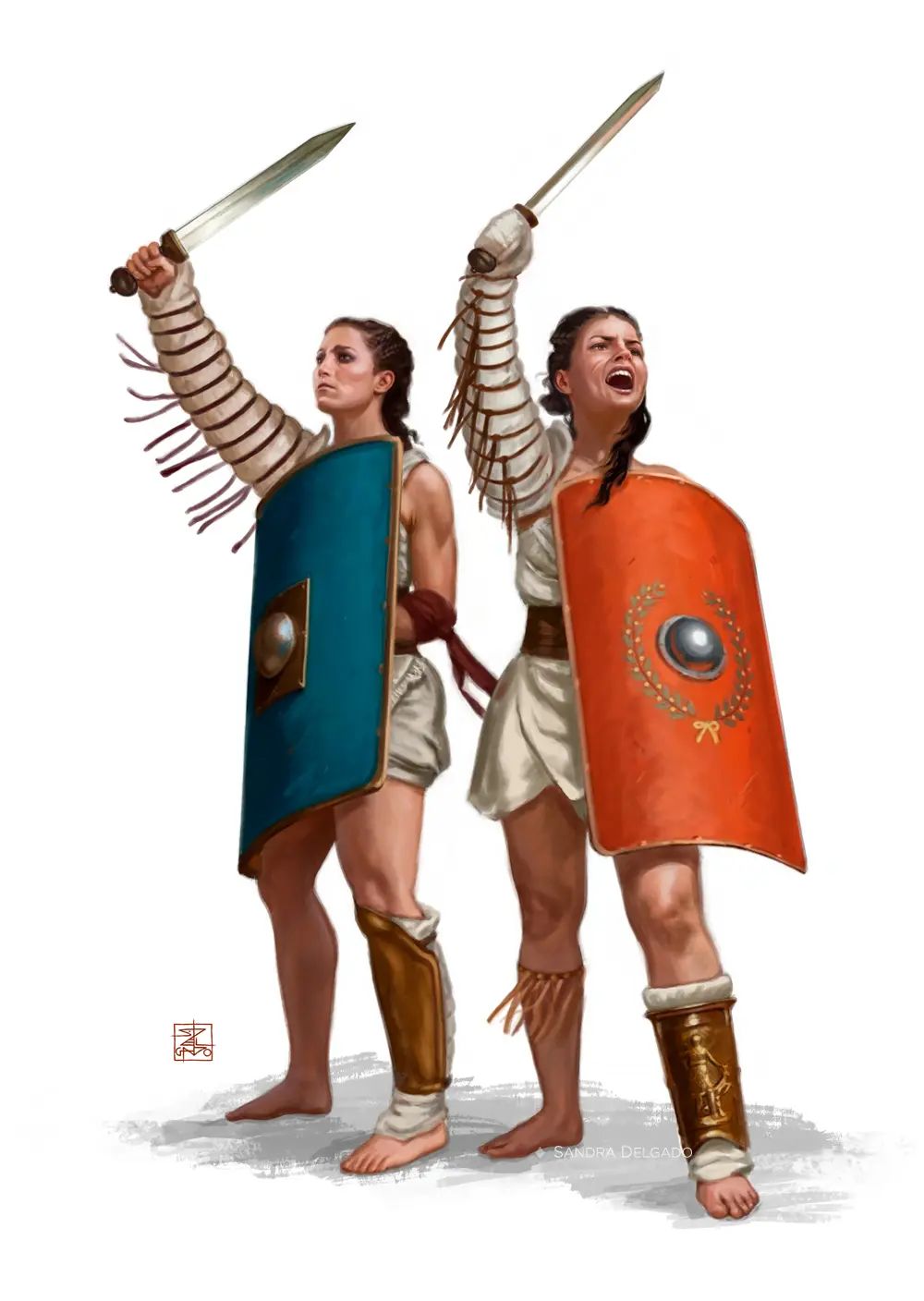
Two female gladiators celebrate their victory and their honorable release from the arena, their fight ending in a draw thanks to their skill and courage. In their right hands, they raise a gladius, and in their left, they hold a medium-sized rectangular scutum with a central boss. Both also wear a greave on their left leg, and their overall attire is reminiscent of the provocator gladiator, but they do not wear helmets or possibly cardiophylax (chest protectors).
The illustration was inspired by a marble relief from Halicarnassus (the last image on the page), present-day Bodrum (Turkey), depicting a battle scene between the Amazons and Aquilia. We know these names because they are inscribed at the bottom of the relief, and the inscription at the top indicates that they were able to leave the arena after a battle that did not produce a clear victor. Unfortunately, this piece arrived at the British Museum in 1846 as a donation from the Ottoman Sultan Abdülmecid I, and it is completely out of context: its function, its exact location within the Halicarnassus archaeological site, and its date are unknown, although it has been suggested that it could date from between the 1st and 2nd centuries AD. Despite this, it continues to travel the world as the unique artifact that it is.
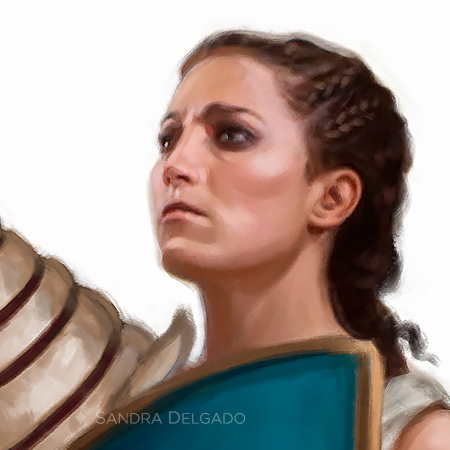
Detail.
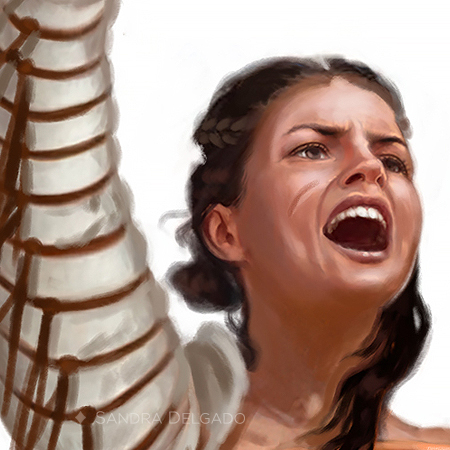
Detail.
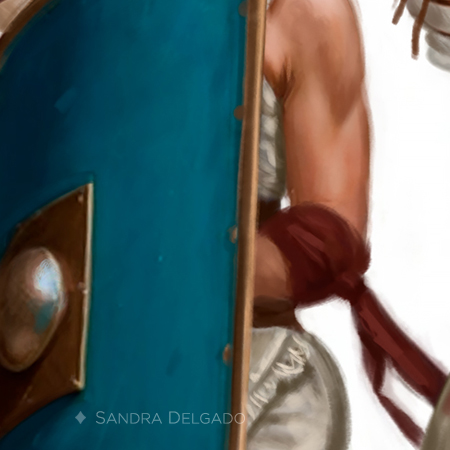
Detail.
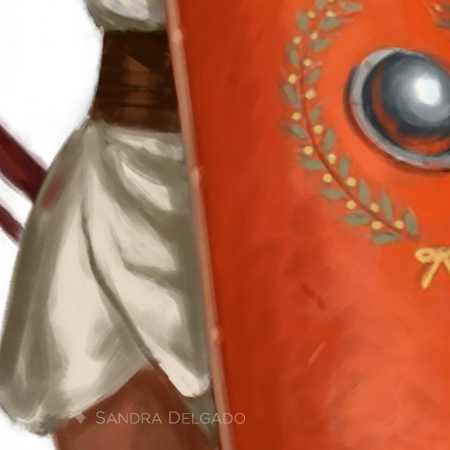
Detail.
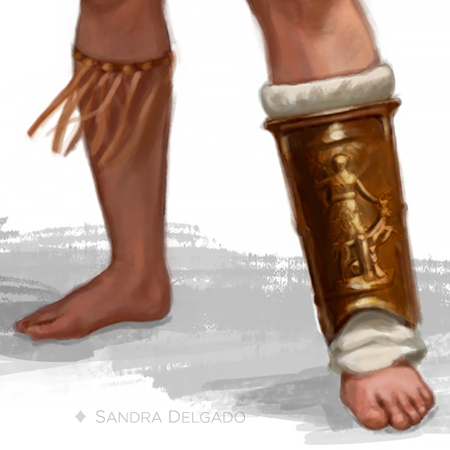
Detail.
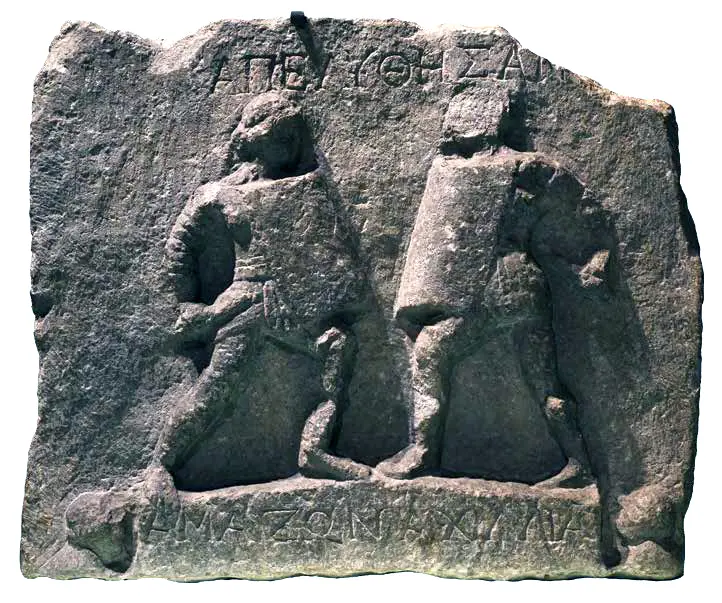
For the book Gladiators. Courage in the Face of Death, by Fernando Lillo Redonet and María Engracia Muñoz-Santos (Desperta Ferro Ediciones. Madrid, Spain. 2024).
You can find out more about the book, purchase it and check out the rest of their magnificent catalogue here.
© 2026 Sandra Delgado. All rights reserved.
